
Paver patio guide · Louisville area
Paver Patio Cost: A Louisville Budget Guide
A patio budget needs to cover the finished surface and the work beneath it. Start with a published cost reference, translate it to a useful footprint, then account for what your yard needs.
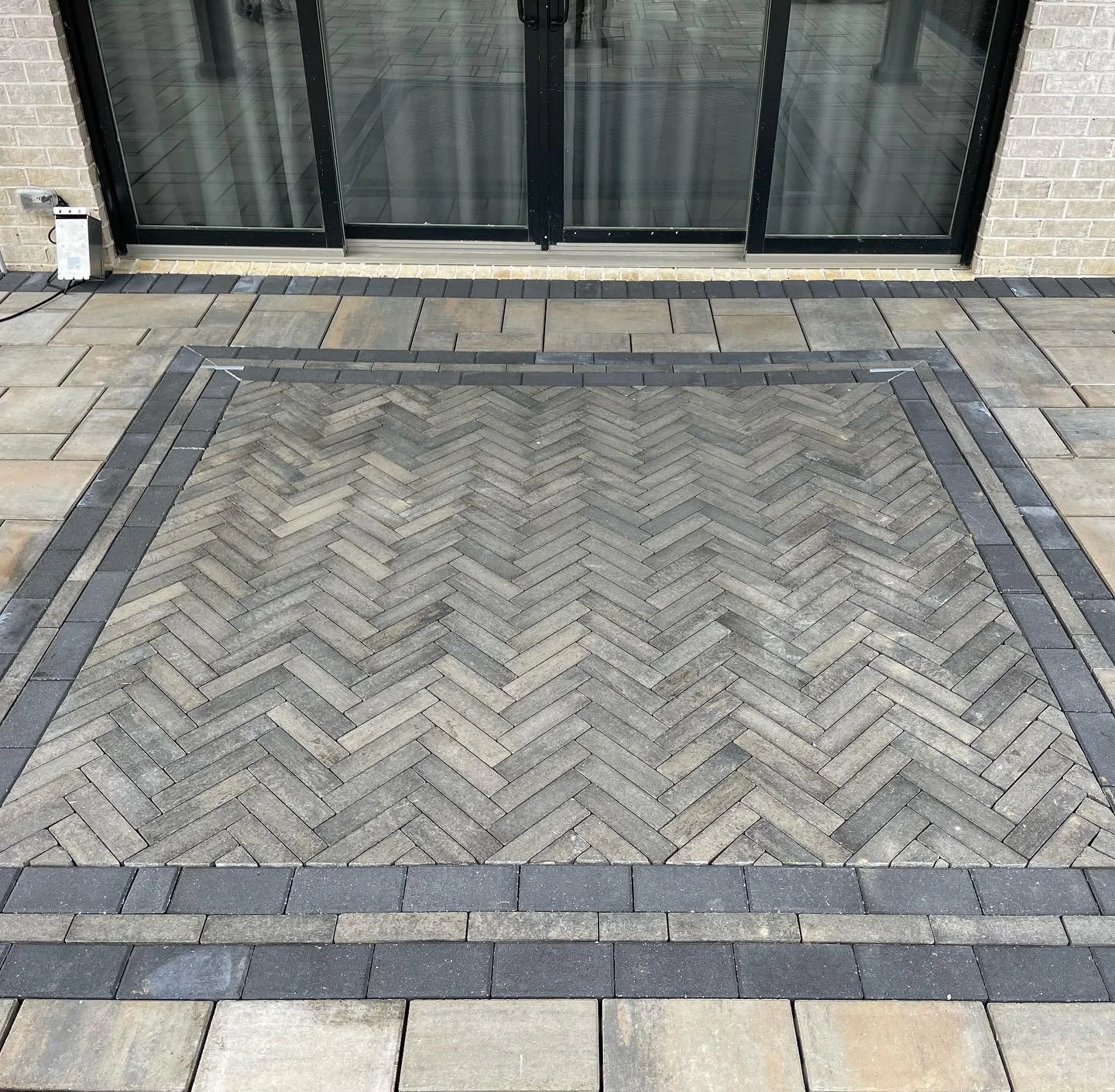
A starting point for the budget
What does an installed paver patio cost?
Unilock's paver patio cost guide gives an installed example of $12,000–$16,000 for 400 square feet, or $30–$40 per square foot. Use it as a manufacturer budgeting reference, not a Louisville market average or a 4 Seasons Outdoor Living quote.
The table applies that benchmark to three footprints. Only the 400-square-foot figure is Unilock's project example; the other totals are simple calculations, not separate estimates.
| Footprint | Area | Budget illustration |
|---|---|---|
| 12 × 12 ft | 144 sq ft | $4,320–$5,760 |
| 16 × 20 ft | 320 sq ft | $9,600–$12,800 |
| 20 × 20 ft | 400 sq ft | $12,000–$16,000 |
A square-foot calculation cannot tell you whether old concrete must come out, a slope needs a wall or equipment can reach your backyard. Those details can put a proposal outside the illustration. Small jobs also do not necessarily scale down evenly because delivery and setup still have to happen.
Before choosing a size, mark out your table and chairs, including room to pull a chair back and walk past it. A lower total is not useful if the finished patio cannot comfortably fit the way you want to use it. Our paver patio service page covers those layout decisions.
Beyond the paver price
Why two patios of the same size can cost differently.
A store price for pavers covers one component. An installed proposal also has to account for getting the yard ready and leaving a finished result. These are the differences to look for when two totals seem far apart.
Removal and access
Replacing an existing slab adds demolition and disposal. A narrow gate, long route from the street or obstacles beside your house can change how materials and excavated soil are moved.
Ground preparation and water
Excavation, compaction, base materials and drainage respond to the site. A flat-looking surface does not remove the need to plan where water will go. A raised patio may also need retaining wall work that a ground-level layout avoids.
Paver selection and installation detail
Ask for the specific product, finish, pattern and border. Curves, inlays and transitions introduce different cuts and detailing than a straightforward rectangle. Compare alternatives with the footprint held constant.
Steps, connections and restoration
Steps to a door, connecting walks, lighting and repairs to disturbed lawn are separate things to define. Do not assume that a patio total includes every improvement around it.
The Concrete Masonry & Hardscapes Association's application guide identifies site location, pattern, area, base requirements, edge restraints and drainage among the factors that affect paver pricing. The specification matters as much as the headline rate.
Budget for your address
Check drainage and permitting before finalizing the patio.
For a home in Louisville, check more than the visible patio area. Louisville MSD's permitting guidance lists patio construction among projects typically reviewed under its Single Family, Demolition or Small Commercial category for erosion prevention and sediment control. Ask what applies to your address and who will handle any needed review.
Bring up standing water, downspout discharge and the height of the patio relative to doors before settling the scope. If drainage work is needed, have it identified separately so it is not confused with the cost of laying pavers.
A home in Crestwood or Floyds Knobs may fall under a different jurisdiction. Use the requirements for your own address rather than applying Louisville guidance across the full service area.
Make the numbers comparable
Ask for a base proposal and separately priced options.
Define one patio you could be happy with: its footprint, paver product, preparation, drainage plan and finished edges. Then request separate prices for choices such as a decorative inlay, additional walk or larger seating area. You can see what each option adds without changing several assumptions at once.
- Confirm the measured area and the exact paver product.
- Identify removal, disposal, excavation and base preparation.
- Define bedding, joint material, edge restraint and water management.
- Separate steps, walls, lighting and connecting paths.
- Clarify permit responsibilities, cleanup, lawn restoration and exclusions.
If the total is too high, price a simpler shape or different finish before reducing necessary preparation. CMHA's construction guidance treats base preparation, bedding and edge restraint as parts of the pavement system. Decorative upgrades can be optional; the work needed to support the patio is a different conversation.
If you want to phase the work, discuss the eventual footprint first. A future extension may affect today's edges, elevations and access. For planting around the patio, the landscaping cost guide explains how to define that separate scope.
After installation
Include care and potential repairs in the decision.
Pavers need attention to joints, stains and any uneven areas. Ask which cleaning products suit the selected finish, whether sealing is appropriate and how joint material should be maintained. Avoid building your budget around one universal cleaning or sealing schedule.
One useful repair characteristic is that units can be lifted and reset in some situations. That does not make settlement a cosmetic issue: the underlying cause still needs attention. CMHA's maintenance guide describes correcting settled areas and repairing edge restraints. Widening joints or loose edges deserve a closer look rather than simply adding more sand.
Paver patio cost FAQ
Common questions before you request a price.
How much does a 20-by-20 paver patio cost?
A 20-by-20 patio is 400 square feet. Unilock's published installed-cost example for that size is $12,000–$16,000. That is a manufacturer budgeting reference, not a Louisville price survey or a quote from 4 Seasons Outdoor Living. Your site conditions and written scope determine your price.
How much would 1,500 square feet of pavers cost to install?
Multiplying 1,500 square feet by the $30–$40 benchmark gives $45,000–$60,000. That is an arithmetic illustration extrapolated from Unilock's 400-square-foot example, not an estimate for a larger patio. Larger layouts, site preparation and added features need a separate proposal.
Can I save money by simplifying the patio design?
Ask for a simpler footprint, fewer decorative borders or a different paver option to be priced against the same preparation scope. Keep room for furniture and walking paths. Reducing decorative complexity is a different decision from omitting needed excavation, base work, drainage or edge restraint.
What ongoing costs should I consider with pavers?
Allow for cleaning, joint care and any sealing appropriate to the selected product. Uneven areas or loose edges may also need attention. Pavers can sometimes be lifted and reset, but the cause of movement must be addressed. Ask for care instructions and avoid assuming that every paver needs the same treatment.
Cost reference: Unilock's published installed patio example. Size illustrations use the same benchmark; they are not prices for the photographed project.
From a budget to a written scope
Find out what your patio would cost.
Tell 4 Seasons Outdoor Living where your home is, roughly how much patio you want and whether there is an existing surface to remove. Include any slope, access or water concerns so the conversation starts with the work your yard actually needs.
Request a paver patio estimate